Assistant Teaching Professor
School of Informatics, Computing, and Cyber Systems, Northern Arizona University

Researcher | Educator | Engineer | Founder
Assistant Teaching ProfessorSchool of Informatics, Computing, and Cyber SystemsNorthern Arizona University
My work connects interpretable acoustic modeling with AI-enabled engineering and embodied intelligence, from understanding complex physical systems to building practical intelligent applications.
Profile
Physical insight becomes computational intelligence.
I am an Assistant Teaching Professor at Northern Arizona University. My research spans acoustic modeling, AI applications in engineering, including AI-enabled CAD and robotics, data analytics, and information systems.
I earned my Ph.D. in Mechanical and Aerospace Engineering from Rutgers University in 2022. Before joining NAU, I worked in seismic imaging at CGG and held teaching and academic administration roles in the Rutgers School of Engineering and Rutgers Business School.
Since joining NAU in April 2024, I have served on faculty comprehensive review and doctoral admissions committees and as Assistant Director of Graduate Programs. I am also leading the development of a doctoral program centered on engineering applications of AI and closer integration between research and industry.
Across more than eight years of teaching in mechanical engineering and information systems, I have taught over 2,000 students and guided hundreds of graduate capstone projects. My current collaborations include researchers at Harvard University, the University of Oxford, and other international institutions.
Experience & education
School of Informatics, Computing, and Cyber Systems, Northern Arizona University
Rutgers University
North America Surface Imaging, CGG
Rutgers University
Rutgers University
Hefei University of Technology
Established research
Classical Helmholtz models become less reliable as resonator geometries grow asymmetric, multi-necked, or otherwise complex. I developed geometry-aware analogy mass-spring models that translate standing-wave behavior into fast, interpretable prediction.
The resulting AMSS and ASPMSS frameworks connect target sound-reduction frequencies directly to feasible resonator geometry, replacing repeated trial-and-error simulation with an analytical design workflow.
View this work on Google Scholar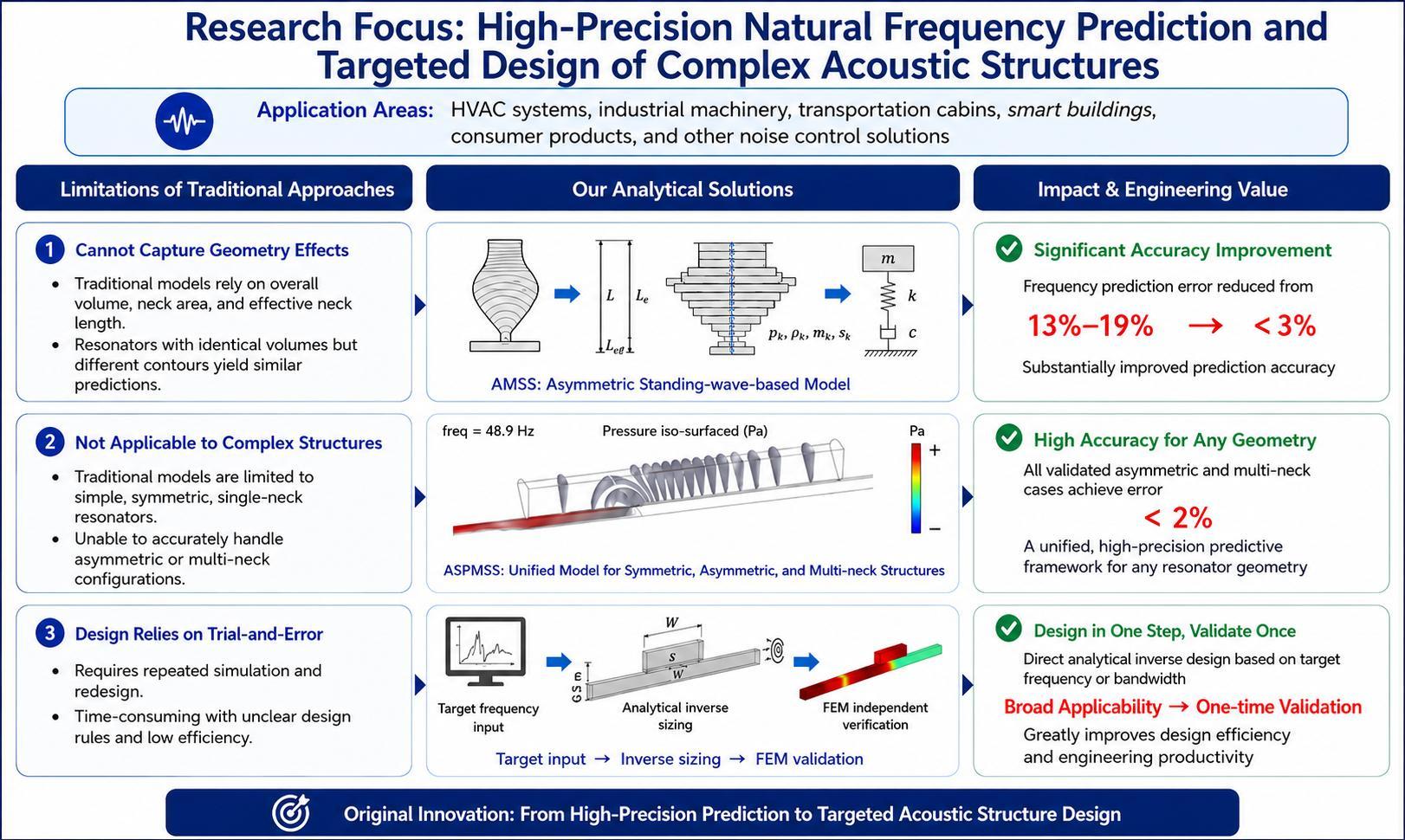
Active research
Current projects extend interpretable physical models into data-efficient machine learning, domain-adapted language models, and embodied systems.
Active direction 01
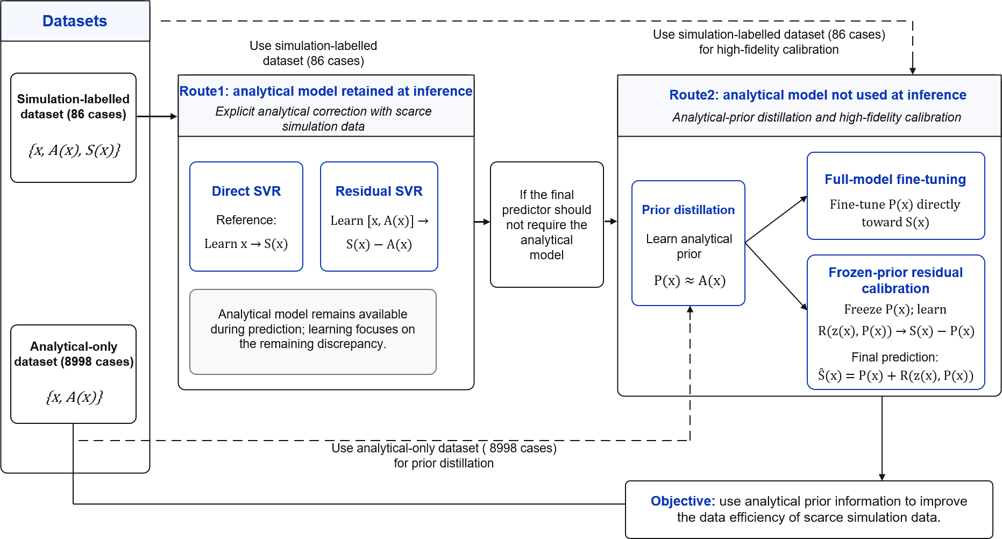
This framework combines inexpensive analytical models with scarce high-fidelity simulations. Residual learning and prior distillation improve resonator prediction while preserving either explicit physical interpretability or a self-contained inference model.
Read the preprintActive direction 02
RA-FinBERT combines LoRA-adapted contextual representations with lightweight sentiment and source features. The model improves low-resource financial sentiment classification with only a small number of additional trainable weights.
Read the preprint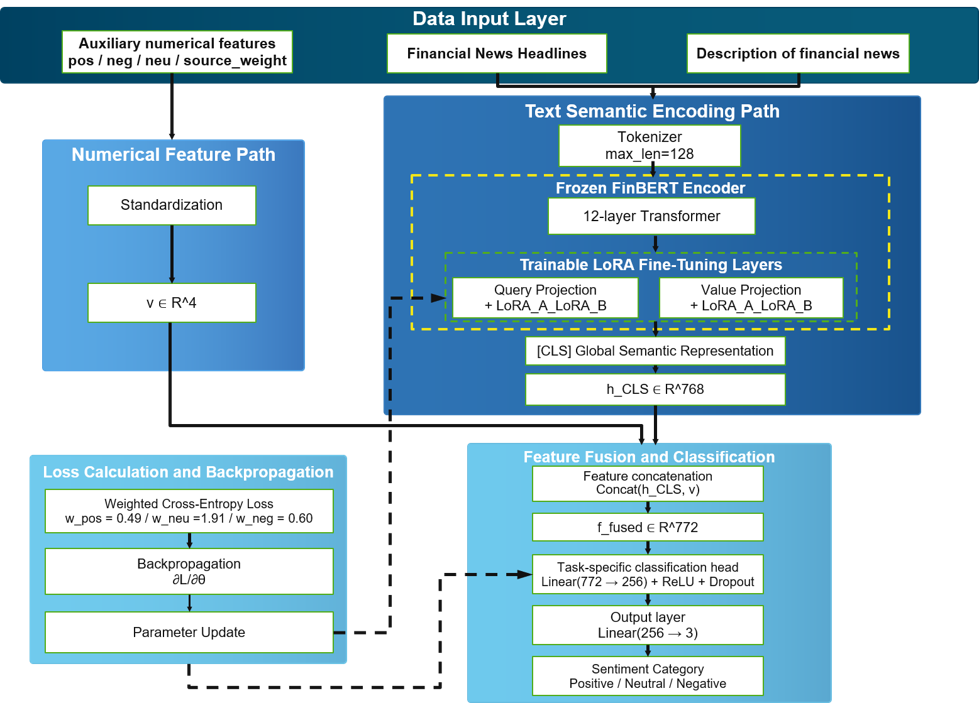
Active direction 03
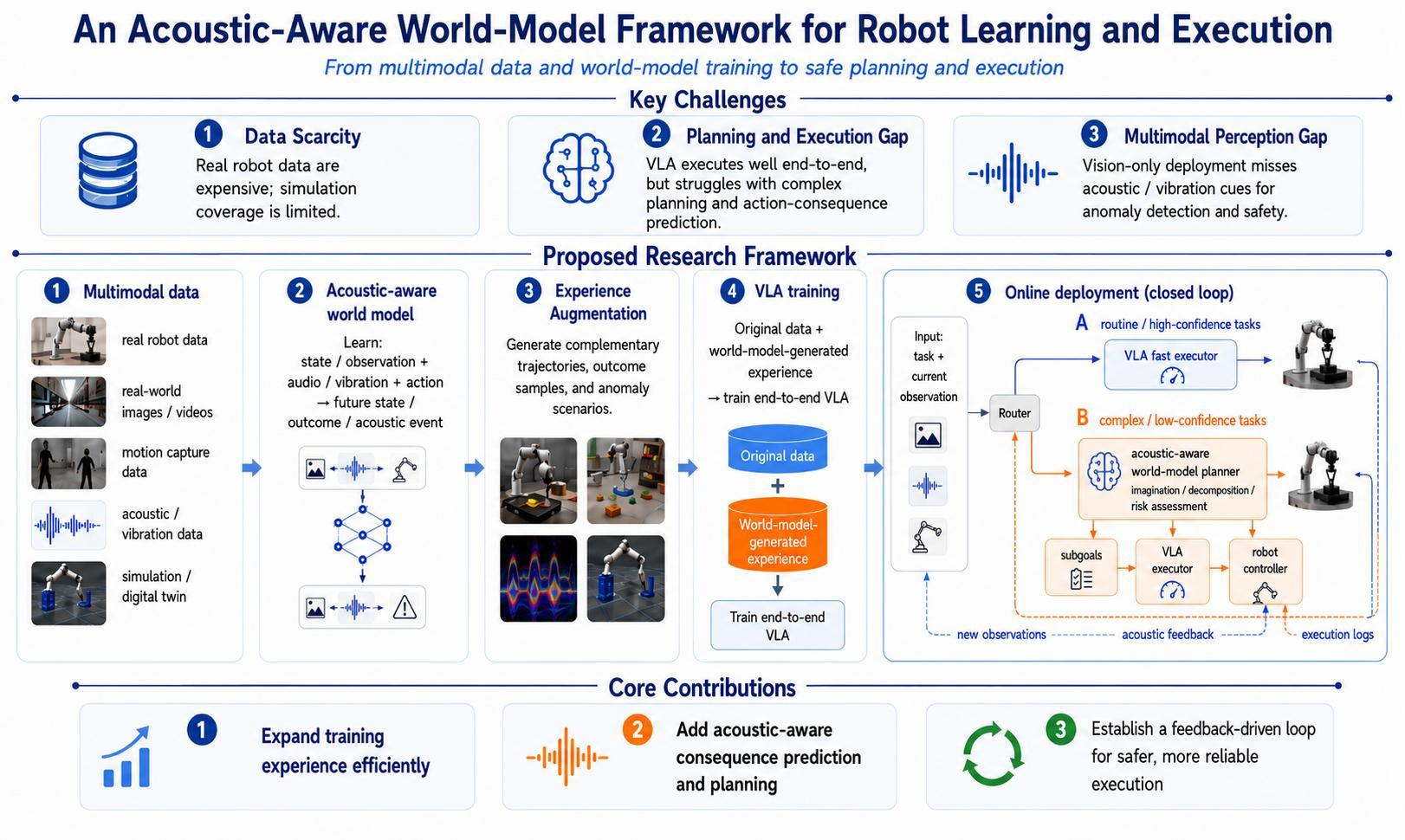
This direction combines motion, audio, vibration, state, and action for safer robot learning and execution. Related work also explores natural-language-driven CAD, multimodal evaluation, and intelligent engineering workflows.
Read the research statementResearch output
Jiaming Li
arXiv:2608.16873, under review at Journal of Sound and Vibration
Fan Zhang and Jiaming Li, co-first authors
arXiv:2608.09834, under review at Journal of Intelligent Information Systems
Jiaming Li, Xue An, and Hae Chang Gea
Acta Acustica 10, 64
Longji He, Elena Emma Wang, Xichun Wang, Juntao Xu, and Jiaming Li
arXiv:2604.13984
Qiang Zhang, Elena Emma Wang, Jiaming Li, and Xichun Wang
arXiv:2601.06627
Zhongyu Ou, Elena Emma Wang, Jiaming Li, and Xichun Wang
SSRN Electronic Journal
Jiaming Li, Xue An, and Hae Chang Gea
Journal of Vibration and Acoustics 147(6), 061003
Xue An, De Li, and Jiaming Li
Scientific Reports 15, 42790
Jiaming Li and Hae Chang Gea
Journal of Vibration and Acoustics 147(2), 021001
Jiaming Li, Bowen Huang, and Hae Chang Gea
The Journal of the Acoustical Society of America 156(6), 4153-4168
Jiaming Li and Hae Chang Gea
AIP Advances 14(3), 035248, Editor's Pick
Xue An, Shanhai Jin, Dejin Zhao, Lifu Wang, and Jiaming Li
Structures 66, 106878
Jiaming Li, Hae Chang Gea, and Euihark Lee
21st IAPRI World Conference on Packaging: Driving a Sustainable Future
Technical expertise
Methods and platforms used across applied AI, computational modeling, robotics, simulation, and information systems.
Ventures

Founder
An early-stage robotics venture developing evaluation and benchmarking infrastructure for humanoid intelligence in industrial, care, and human-centered environments.
Company profile
Founder
A global food sourcing and importing venture combining supplier relationships, international B2B trade, and AI-enabled operating tools for smaller businesses.
Company profileContact